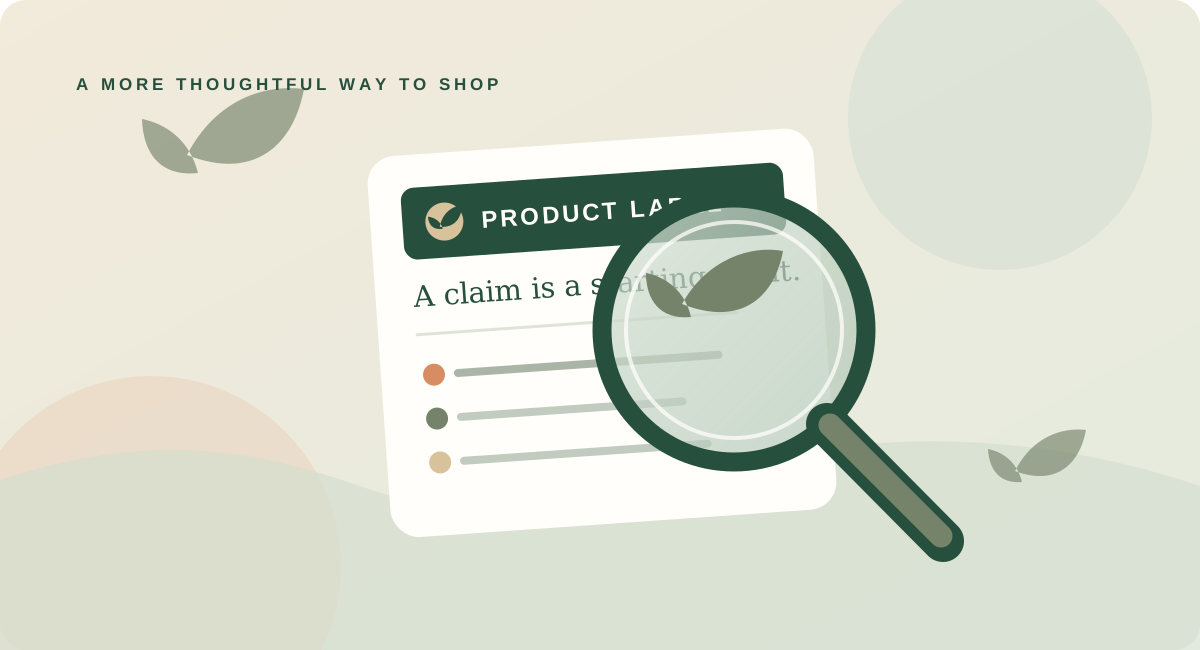
When a product is made for children, it is understandable to want a clear answer: is this safe? But “non-toxic” on a package rarely answers every question a parent might have. A product’s risks depend on what it is, how it is used, how much exposure there is, and who is using it. No single word can replace those details.
“Non-toxic” is a claim, not a universal seal
The Federal Trade Commission’s Green Guides say an unqualified “non-toxic” marketing claim is likely to suggest that a product is non-toxic for people and for the environment. The claim should be supported by appropriate scientific evidence or clearly qualified so it does not mislead. That guidance is about how marketers make environmental claims; it is not a government approval badge for every product carrying the words.
So treat “non-toxic,” “clean,” “natural,” and “chemical-free” as prompts to ask questions—not proof that an item is risk-free. Everything made of matter contains chemicals, and natural origin by itself does not establish safety or suitability.
Look for information you can actually use
- Identify the product category. Toys, cosmetics, cleaners, furniture, and food-contact items follow different rules and have different kinds of safety information.
- Read the intended-use and age instructions. Check warnings, age range, care directions, and whether a product is meant to be mouthed, heated, applied to skin, or used only with supervision.
- Look for ingredient or material disclosure. A clear list gives you something specific to review, especially if your child has a known allergy or sensitivity.
- Check a certification’s scope. A credible program explains what it evaluates and what a label covers. For example, EPA’s Safer Choice program evaluates ingredients and product criteria for eligible cleaning products; it is not a certification for every children’s product.
- Check for recalls when relevant. Search the U.S. Consumer Product Safety Commission’s recall database by product or brand, particularly for toys and gear.
Don’t let perfect become another pressure
You do not need to empty cupboards or replace every item with a premium alternative. Use products as directed, keep them in good condition, and make a note to research replacements when something wears out or no longer fits your child’s needs. For a specific health concern, ask your child’s clinician rather than relying on a product slogan or an online score.
A simple next step: Pick one product you are already considering. Ignore the front-label buzzwords for a moment and check its use directions, materials or ingredients, and any relevant independent program or recall information.
Sources and further reading
- 16 CFR § 260.10: Non-toxic claims (Electronic Code of Federal Regulations; FTC Green Guides)
- EPA Safer Choice Standard and Criteria
- CPSC Recalls & Product Safety Warnings
This article offers general shopping information, not medical advice or a product-specific safety assessment. Always follow the product label and ask a qualified professional about individual health concerns.
More in this series: Where to start on a budget · Personal-care label claims · Secondhand toy checks · Choosing family cleaners